

Seller Closing Costs in Mesa
Buying or selling a home involves more than agreeing on a purchase price. Closing costs can have a meaningful impact on how much a buyer needs to bring to closing or how much a seller ultimately walks away with.
For buyers and sellers in Mesa, Arizona, understanding these costs before entering negotiations can make the transaction much easier to plan for. The exact amount will vary depending on the purchase price, financing, title and escrow company, property taxes, loan terms, negotiated concessions and other transaction-specific factors.
As a Mesa real estate professional, Lorraine Ryall helps clients look beyond the headline sale price and understand the numbers that actually matter to their bottom line.
What Are Closing Costs?
Closing costs are the various expenses associated with completing a real estate transaction. They can include title and escrow fees, lender charges, recording fees, taxes, prepaid expenses and other transaction costs.
The costs are different for buyers and sellers, and there is no single percentage that applies to every transaction.
For example, a financed buyer may have lender-related costs that a cash buyer does not. Similarly, a seller's final proceeds can be affected by mortgage payoffs, negotiated concessions, real estate compensation, title charges, property taxes and other expenses.
That is why a personalized estimate is much more useful than relying on a general rule of thumb.
Seller Closing Costs in Mesa
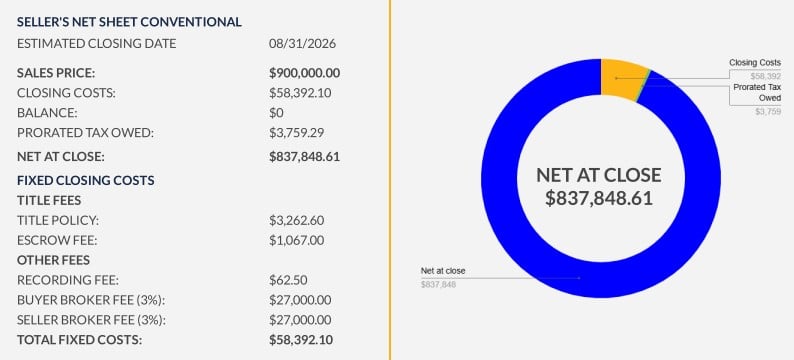
For sellers, the number that matters most is not simply the agreed-upon sale price. It is the estimated net proceeds after the applicable costs are deducted.
A seller's estimated net sheet can help answer an important question:
"If my home sells for this amount, approximately how much will I actually receive?"
Lorraine's approach is to use a conservative estimate when preparing a seller's projected net. In practical terms, that means allowing for the higher anticipated cost where an amount is not yet known.
If the final negotiated expense is lower, the seller simply receives more than the conservative estimate projected.
Seller costs may include items such as title and escrow charges, property-tax prorations and negotiated real estate compensation. Depending on the property and transaction, there may also be HOA-related charges or other expenses.
One important point is that the seller's estimated net is before any payoff of an existing mortgage or other liens, unless those amounts are specifically included in the calculation.
Why Your Net Proceeds Matter When Pricing a Home
Pricing strategy should never be based solely on what a seller hopes to receive.
A strong pricing conversation considers the relationship between:
- Expected sale price
- Estimated closing costs
- Existing mortgage payoff
- Potential concessions
- Negotiated compensation
- Property taxes and other prorations
- The seller's desired net proceeds
This is where local real estate experience becomes particularly valuable. Two homes selling for the same price can produce very different financial outcomes depending on their circumstances.
Buyer Closing Costs: What Should You Budget For?
Buyers face a different collection of expenses.
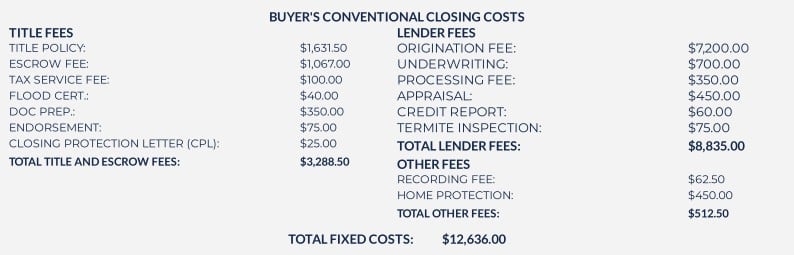
For a financed purchase, one of the biggest variables is often the lender. Different lenders can structure their fees differently. One lender may charge an origination fee while another may structure its costs differently, and the interest rate and loan terms also need to be considered together.
That makes comparing lenders based solely on one fee or advertised interest rate potentially misleading.
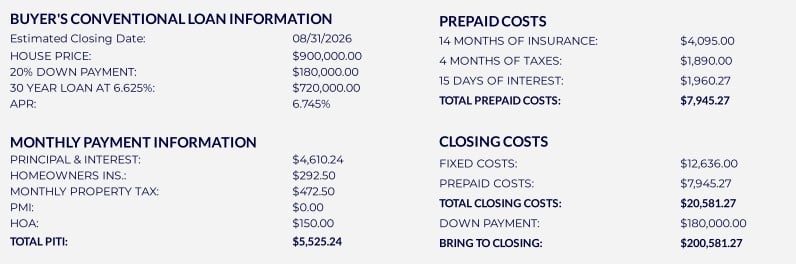
A buyer's closing costs can also include title and escrow charges, recording fees, prepaid items, property-tax adjustments and other transaction expenses.
And remember that not every purchase-related expense necessarily appears as a closing cost. Appraisals and inspections, for example, are commonly paid before closing and should be included in the buyer's overall cash-to-close planning.
What About Buyer Broker Compensation?
Real estate compensation has also changed since the industry practice changes that took effect in 2024.
Buyers working with a REALTOR® generally enter into a written buyer agreement before touring homes, setting out the services provided and the agreed compensation. Compensation remains negotiable.
A seller may also agree to provide compensation toward a buyer broker's services as part of the negotiation, subject to the applicable agreement and rules. Alternatively, buyers and sellers may negotiate seller concessions that can help with certain eligible transaction expenses.
The important takeaway is that buyers should understand who is responsible for which costs before making an offer, rather than making assumptions based on how transactions worked in the past.
Can a Seller Pay Some of the Buyer's Closing Costs?
Potentially, yes.
Seller concessions can be negotiated as part of a purchase agreement and may help cover certain eligible buyer expenses. The amount and permitted uses depend on the transaction and, where financing is involved, the buyer's loan program and lender requirements.
This can become an important part of negotiation.
For example, a buyer might be weighing a purchase based on how much cash they need to bring to closing. A seller concession could potentially change that calculation without necessarily changing the property's headline purchase price.
However, concessions are not automatically the best solution in every transaction. The terms need to make sense for both sides and comply with the applicable loan and transaction requirements.
Why Closing Costs Should Be Considered Before You Make an Offer
One of the biggest mistakes buyers can make is focusing exclusively on the purchase price.
A $900,000 home, for example, does not necessarily mean the buyer's total financial commitment at closing will simply be $900,000 minus the down payment.
Likewise, a seller accepting a $900,000 offer should not assume the full amount represents their final proceeds.
That is why Lorraine recommends looking at the complete financial picture before negotiating.
For sellers, this means preparing an estimated net sheet before deciding what price makes sense.
For buyers, it means obtaining a detailed estimate from the lender and understanding the title, escrow, tax and other transaction costs that may apply.
A $900,000 Example: Why Estimates Matter
Lorraine's original closing-cost guide uses a $900,000 transaction as an example to illustrate how buyer and seller costs can differ.
The seller example assumes an August 31, 2026 closing date and includes considerations such as property-tax prorations, title fees and real estate compensation, while excluding any HOA fees and mortgage payoff.
The buyer example assumes a $900,000 purchase, 20% down, a conventional 30-year loan at 6.625% and a $150 monthly HOA fee.
These figures are illustrative rather than a quote for an actual transaction. Loan costs, title fees, taxes, HOA charges and negotiated terms can all change the final numbers.
The purpose of an estimate is to help you understand the structure of the transaction and identify the costs that need to be confirmed.

Lorraine advising clients during a home buying.
How Lorraine Helps Buyers and Sellers Prepare
Closing should not be the first time you see the numbers.
Whether you're preparing to sell a Mesa home or considering a purchase, Lorraine Ryall can help you understand the estimated costs involved and how different negotiation strategies may affect the final outcome.
For sellers, that means looking at the likely net proceeds rather than simply the list price.
For buyers, it means understanding the relationship between the purchase price, financing, closing costs, concessions and cash required to close.
Lorraine's experience as a Mesa Associate Broker, along with her CDPE, CSSN and CNE designations, gives her a strong focus on helping clients navigate the financial and negotiating aspects of a real estate transaction.
If you're considering buying or selling in Mesa, a personalized closing-cost estimate can be a useful first step.
Check out this article next